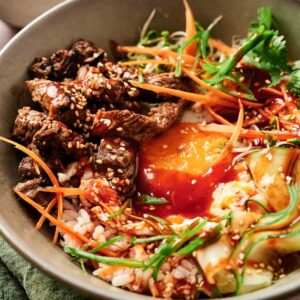
Easy Bibimbap Recipe
Bibimbap is a Korean favorite that mixes rice with colorful veggies and tender beef, all crowned with a runny fried egg. With its spicy gochujang sauce, this Korean rice bowl is a flavorful meal that’s great for trying something new in the kitchen. It’s easy to put together and so tasty to eat, making it a solid choice for any mealtime.
Ingredients
Bibimbap sauce:
- 4 tablespoons gochujang paste
- 2 tablespoons rice vinegar
- 2 tablespoons soy sauce
- 2 teaspoons white sugar
- 2 teaspoons toasted sesame oil
- 1 garlic clove finely grated
Korean beef:
- ½ pound beef tenderloin very finely sliced
- ¼ green apple grated
- 3 garlic cloves grated
- 1 tablespoons soy sauce
- 1 tablespoons brown sugar
- 2 teaspoons toasted sesame oil
- 2 eggs
For the Bowl:
- 2 cups white rice cooked
- 1 carrot thinly sliced
- 1 cucumber thinly sliced
- 1 cup sprouts
- 2 green onions sliced
- Sesame seeds to serve
- Cilantro to serve
Instructions
- To make the sauce, mix all the ingredients in an airtight container and reserve.4 tablespoons gochujang paste, 2 tablespoons rice vinegar, 2 tablespoons soy sauce, 2 teaspoons white sugar, 2 teaspoons toasted sesame oil, 1 garlic clove
- Mix the beef with the green apple, garlic, soy sauce, and brown sugar. Heat a grill to medium-high and add the sesame oil. Once the oil is hot, grill the beef until deeply browned on both sides. Reserve.½ pound beef tenderloin, ¼ green apple, 3 garlic cloves, 1 tablespoons soy sauce, 1 tablespoons brown sugar
- Clean the skillet as much as possible using kitchen towels and add a bit more oil. Sauté the eggs, leaving the yolks still a bit runny.2 eggs
- Arrange the bowls with the rice, beef, eggs, sauce, carrots, cucumber, sprouts, green onions, sesame seeds, and cilantro.2 cups white rice, 1 carrot , 1 cucumber, 1 cup sprouts, 2 green onions, Sesame seeds, Cilantro, 2 teaspoons toasted sesame oil
Notes
- Rice: Use short-grain rice for that sticky texture that holds everything together. Cook it a bit stickier than usual by adding a little extra water.
- Veggies: Don’t shy away from experimenting with different vegetables. Anything goes—from zucchini, bean sprouts, and shiitake mushrooms to bell peppers and radishes.
- Meat alternatives: Not a fan of beef? Chicken, tofu, or even a seafood mix can work great in bibimbap.
- More spice: If you love a good kick, adjust the amount of gochujang in your sauce. More paste equals more fire!
- Dolsot Bibimbap: For that authentic touch and a crispy rice bottom, use a dolsot, or Korean stone pot or hot stone bowl, if you have one.
- Keep it colorful: Aim for a variety of colors with your veggies. It’s not just pleasing to the eye; it also ensures a range of nutrients.
- Prep ahead: Cut all your veggies and make the sauce ahead of time for an even quicker assembly when mealtime rolls around.
Storage and Reheating Instructions
- Separate components: If possible, store the rice, toppings, and sauce separately. This keeps the veggies from getting too soft and the rice from absorbing all the sauce and becoming mushy.
- Cool and Airtight: Let your bibimbap cool to room temperature before storing it in airtight containers.
- Refrigerate: Keep it in the fridge, and it’ll stay good for up to 3 days.
- Reheat: To get everything warm and tasty again, pop it in the microwave or back in a skillet until heated through. Adding a splash of water can help keep the rice from drying out.
- Freeze: You can freeze bibimbap, but ideally, freeze the components separately to maintain the best texture upon reheating. Store it in a freezer-safe container for up to 3 months.
Nutrition
Calories: 489kcalCarbohydrates: 78gProtein: 16gFat: 13gSaturated Fat: 3gPolyunsaturated Fat: 4gMonounsaturated Fat: 5gTrans Fat: 0.01gCholesterol: 164mgSodium: 1609mgPotassium: 696mgFiber: 4gSugar: 20gVitamin A: 5663IUVitamin C: 18mgCalcium: 115mgIron: 3mg
Tried this recipe?Let us know how it was!