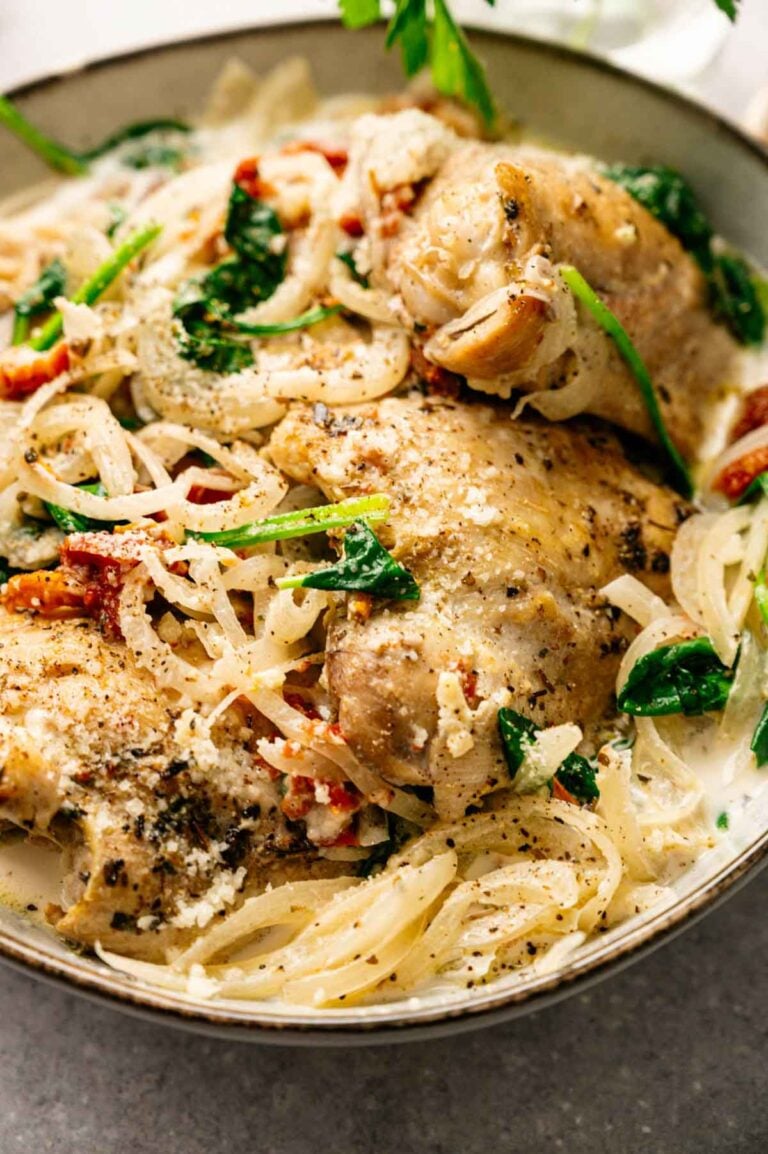
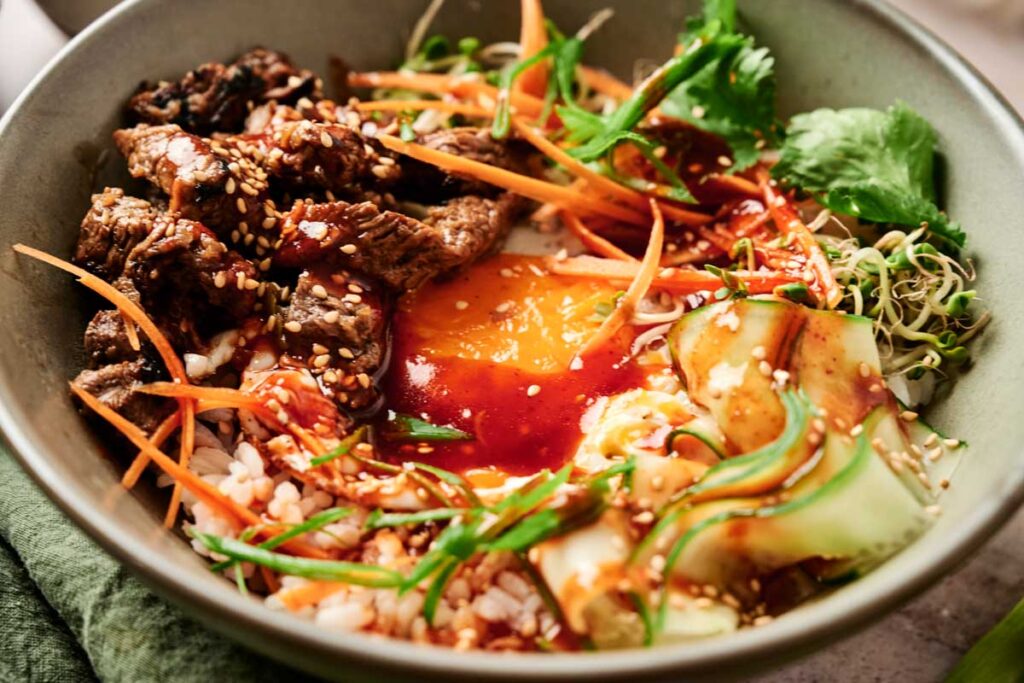
Bibimbap is a Korean favorite that mixes rice with colorful veggies and tender beef, all crowned with a runny fried egg. With its spicy gochujang sauce, this Korean rice bowl is a flavorful meal that’s great for trying something new in the kitchen. It’s easy to put together and so tasty to eat, making it a solid choice for any mealtime.

Why you will love making Bibimbap
Bibimbap is a meal that comes together without a ton of effort. Here’s why you’ll love it:
- Versatility: This dish can adapt to whatever you have on hand. No carrot? Toss in some radish!
- All in one: A complete meal in a single bowl. Get your grains, veggies, protein, and fats all at once.
- Healthy: Packed with vegetables and customizable to include less meat and more plants.
- Flavor-packed: The gochujang sauce delivers a spicy, sweet, and savory punch that ties everything together nicely.
- Clear out the fridge: Bibimbap can bring new life to leftover veggies and rice hanging out in your fridge.
Ingredients You’ll Need
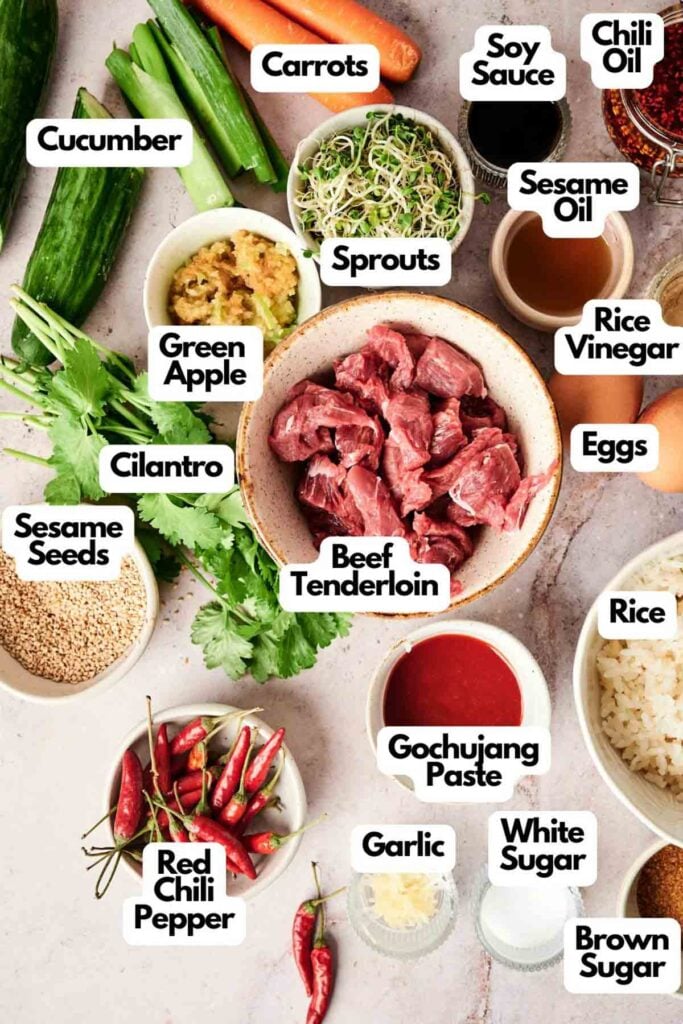
You’ll need all the ingredients in the photograph below.
How to make Bibimbap with Step-By-Step Instructions
A complete printable recipe and the measurements in both US customary and metric are available in the recipe card below.
Getting your bibimbap just right is all about layering the flavors and textures. Here’s how to put it all together:
Prep the Sauce
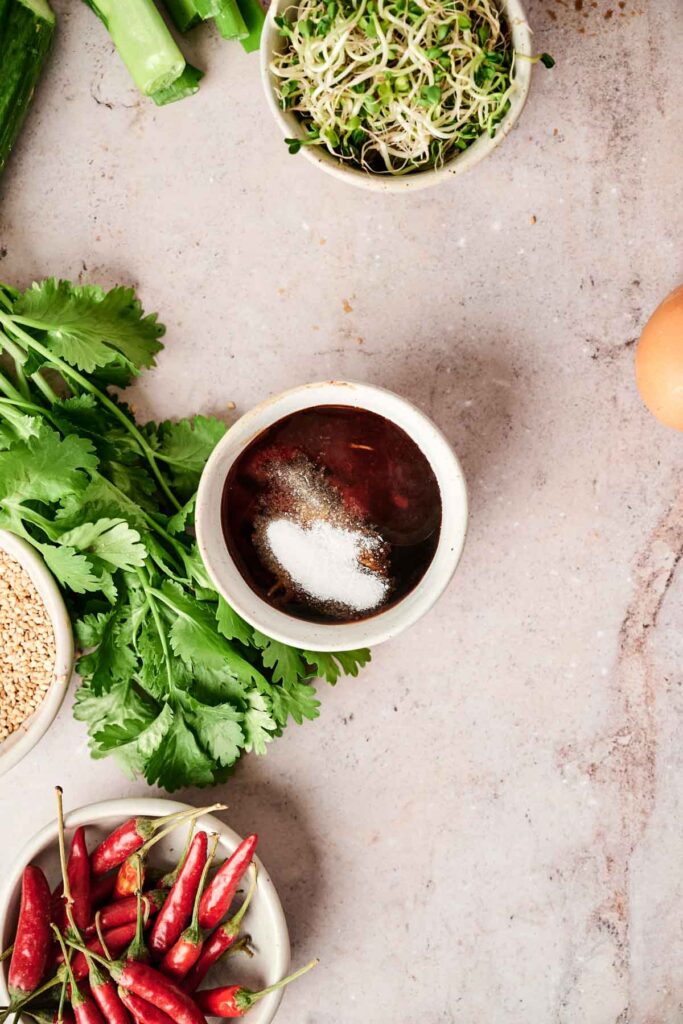
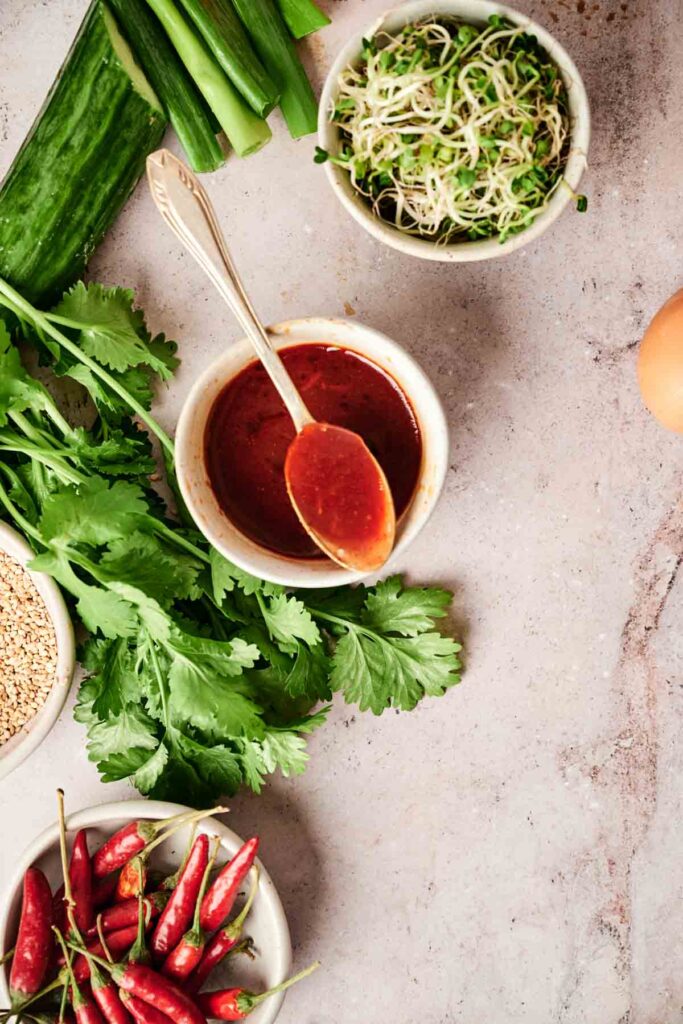
Mix the gochujang paste, rice vinegar, soy sauce, white sugar, and toasted sesame oil in an airtight container. Grate a garlic clove into the mix for that extra kick. Shake or stir well to combine all the flavors.
Cook the Beef
Marinate the thinly sliced beef tenderloin with grated green apple, more garlic cloves, soy sauce, and brown sugar.
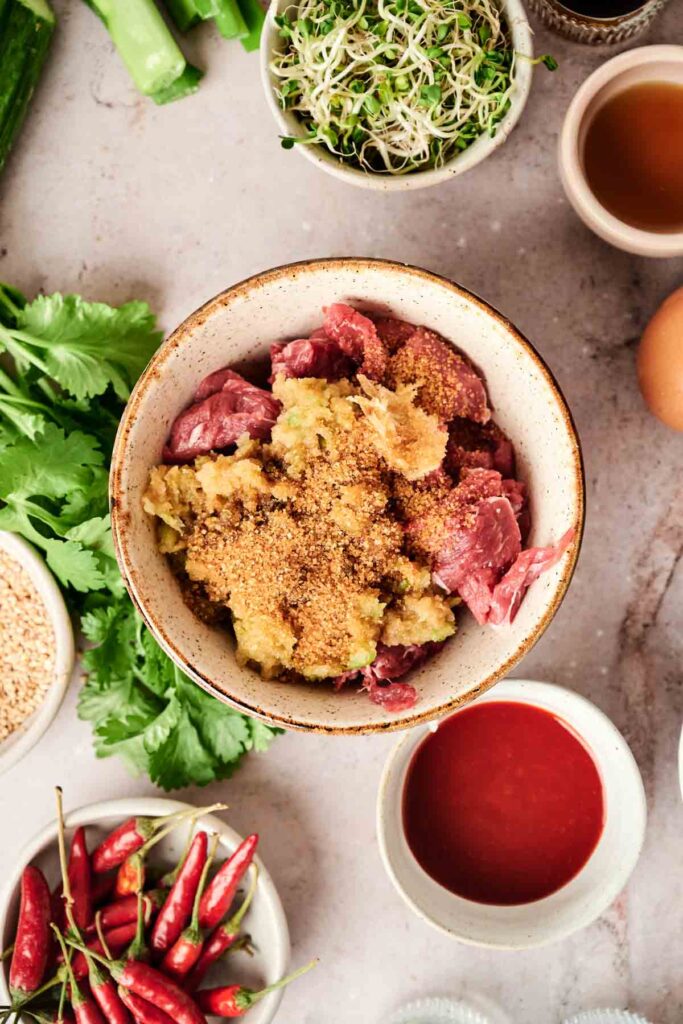
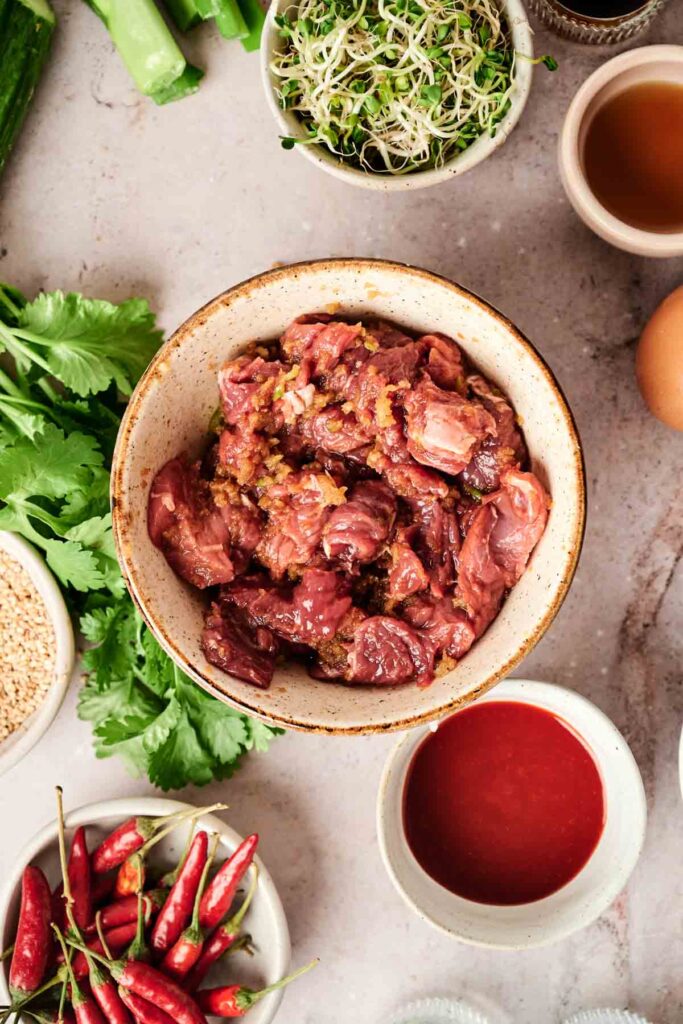
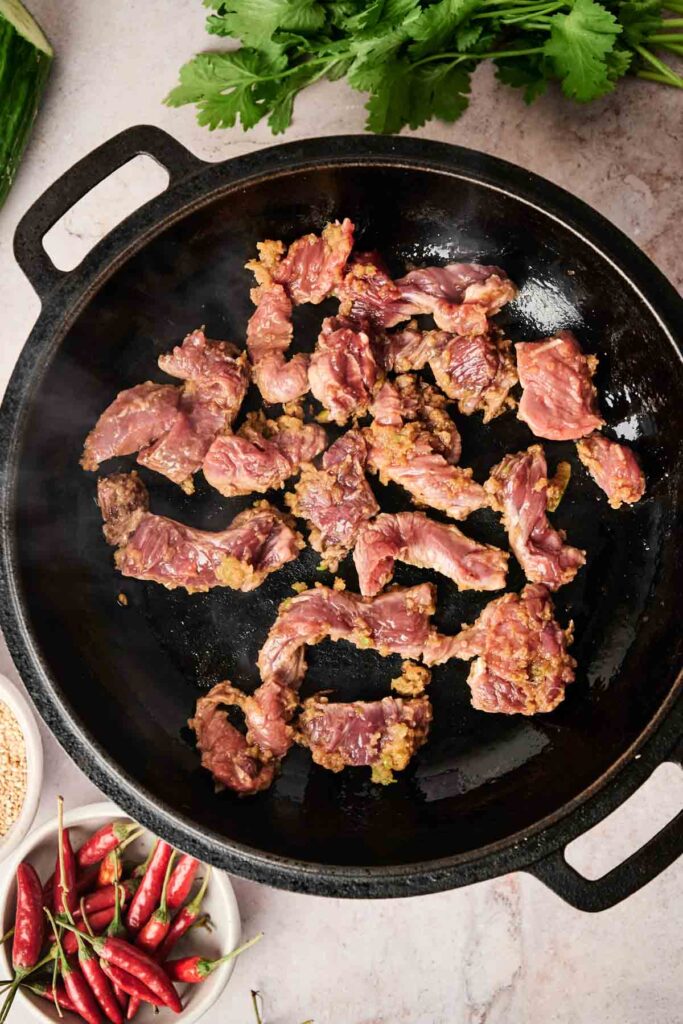
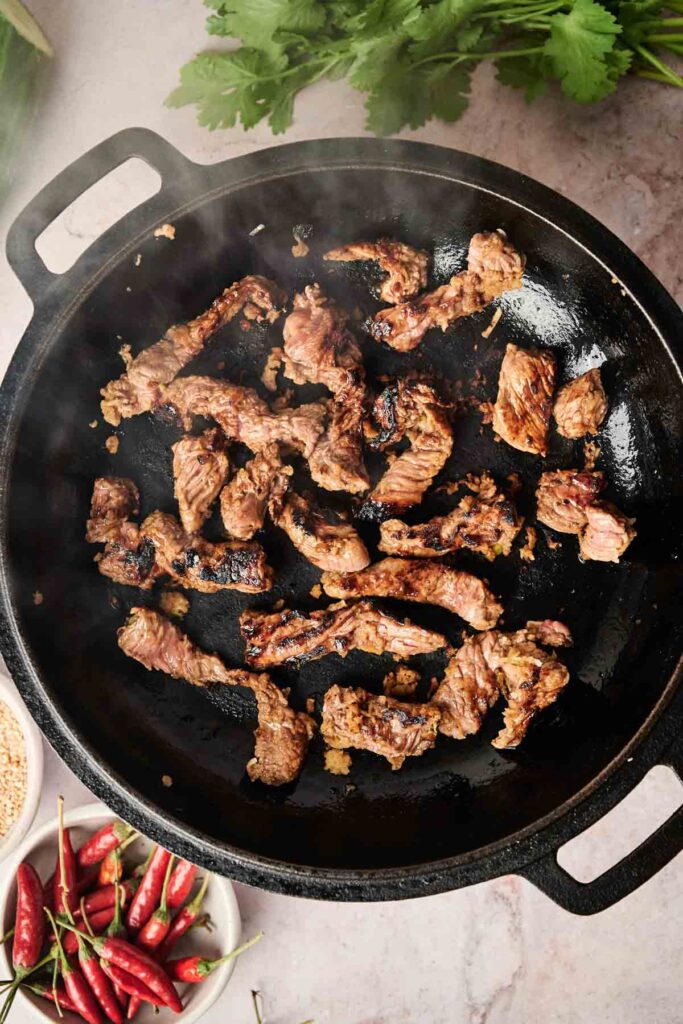
Heat your grill or skillet to medium-high, add some sesame oil, and cook the beef until it’s nicely browned on each side. Set aside.
Fry the Eggs
Wipe down the skillet and add a bit more oil. Crack the eggs into the skillet and fry them, leaving the yolks slightly runny for that perfect bibimbap bite.

Assemble the Bowls
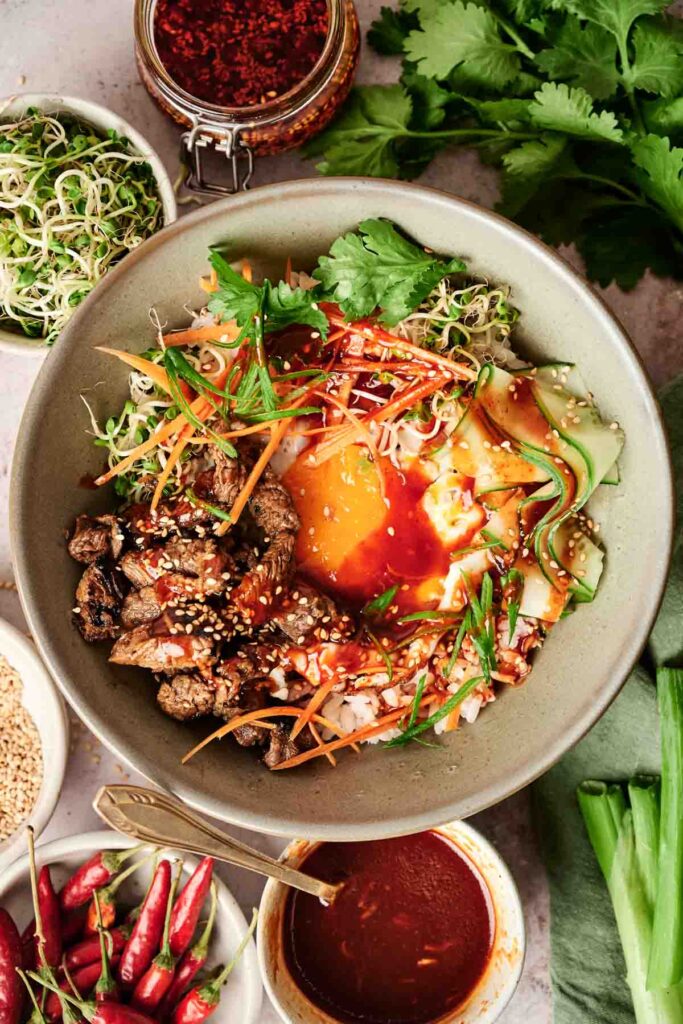
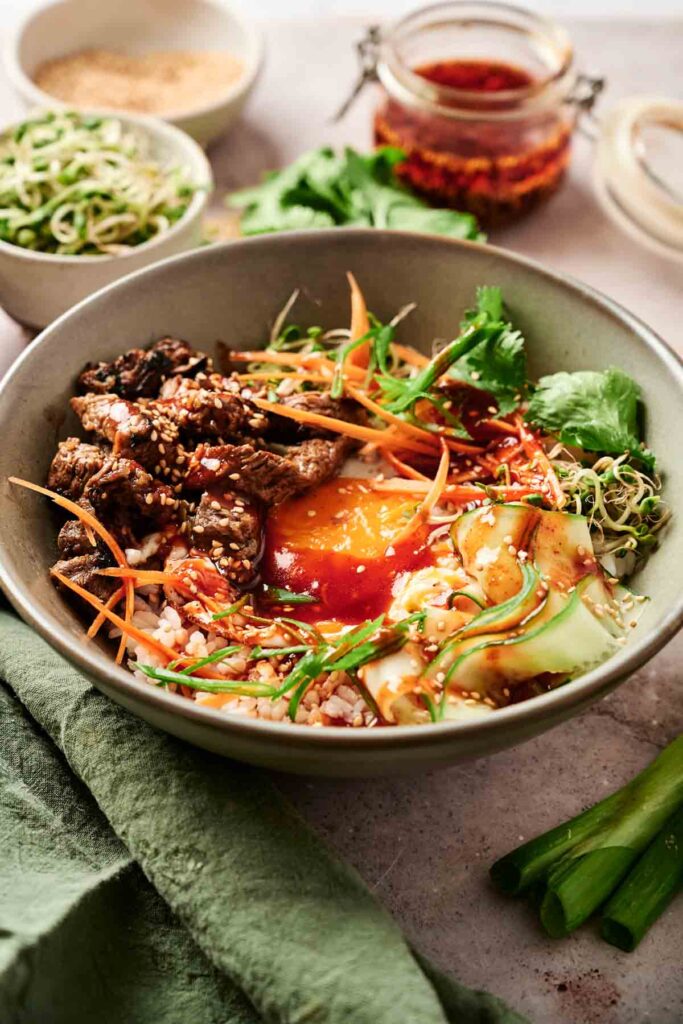
Scoop some rice into each bowl, and neatly arrange the beef, eggs, and your assortment of veggies on top.
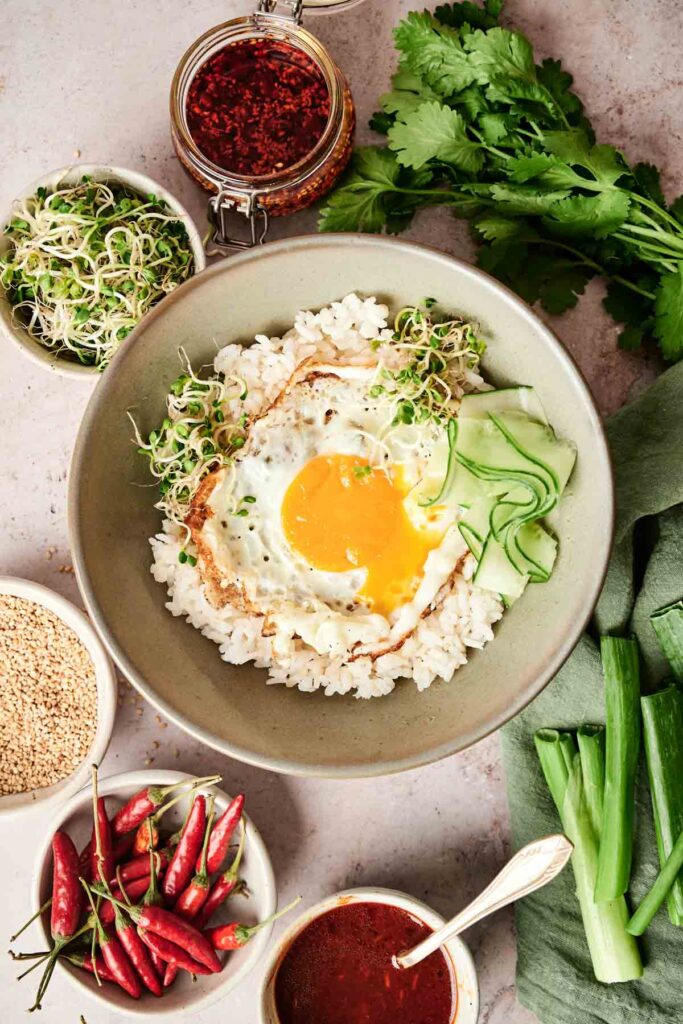
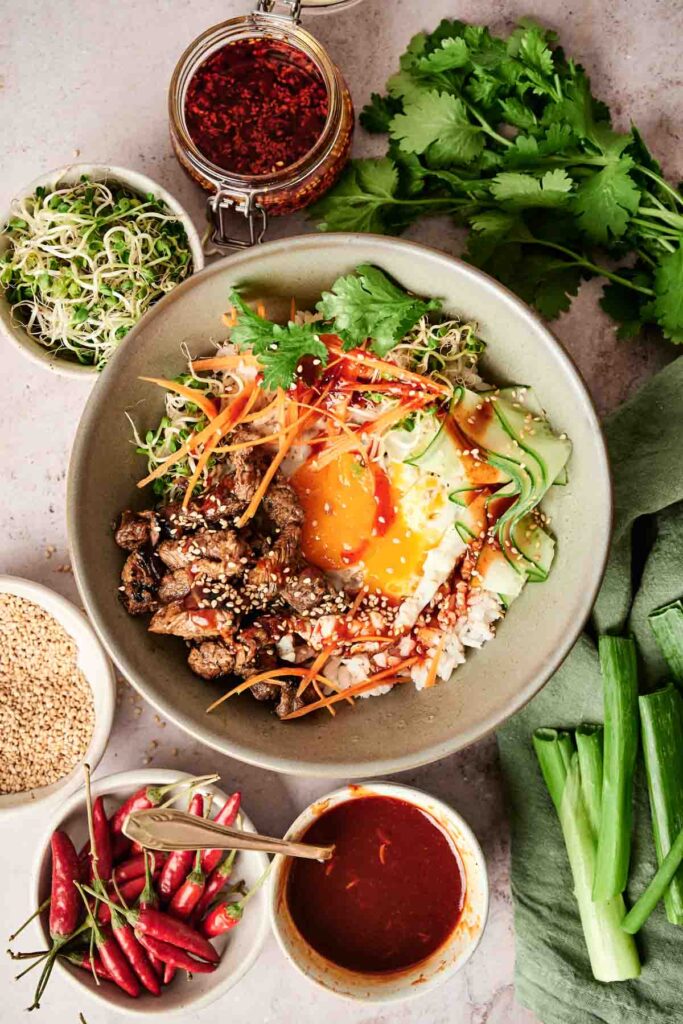
Drizzle generously with the bibimbap sauce, then sprinkle with sliced green onions, sesame seeds, and a bit of cilantro for a fresh touch.
Recipe Notes and Expert Tips
Here are some pro tips to elevate your bibimbap and make the whole process smoother:
- Rice: Use short-grain rice for that sticky texture that holds everything together. Cook it a bit stickier than usual by adding a little extra water.
- Veggies: Don’t shy away from experimenting with different vegetables. Anything goes—from zucchini, bean sprouts, and shiitake mushrooms to bell peppers and radishes.
- Meat alternatives: Not a fan of beef? Chicken, tofu, or even a seafood mix can work great in bibimbap.
- More spice: If you love a good kick, adjust the amount of gochujang in your sauce. More paste equals more fire!
- Dolsot Bibimbap: For that authentic touch and a crispy rice bottom, use a dolsot, or Korean stone pot or hot stone bowl, if you have one.
- Keep it colorful: Aim for a variety of colors with your veggies. It’s not just pleasing to the eye; it also ensures a range of nutrients.
- Prep ahead: Cut all your veggies and make the sauce ahead of time for an even quicker assembly when mealtime rolls around.
How to Store Leftover Bibimbap
Storing bibimbap properly means you can enjoy this tasty dish even on your busiest days. Here’s how to keep it fresh:
- Separate components: If possible, store the rice, toppings, and sauce separately. This keeps the veggies from getting too soft and the rice from absorbing all the sauce and becoming mushy.
- Cool and Airtight: Let your bibimbap cool to room temperature before storing it in airtight containers.
- Refrigerate: Keep it in the fridge, and it’ll stay good for up to 3 days.
- Reheat: To get everything warm and tasty again, pop it in the microwave or back in a skillet until heated through. Adding a splash of water can help keep the rice from drying out.
- Freeze: You can freeze bibimbap, but ideally, freeze the components separately to maintain the best texture upon reheating. Store it in a freezer-safe container for up to 3 months.
What to Serve with Bibimbap
Bibimbap is pretty much a standalone meal, but it pairs wonderfully with a few side dishes to round out your dinner. Here’s what you can serve with it:
Kimchi
This quintessential Korean side dish of fermented cabbage adds a spicy and tangy flavor that complements the savory and sweet elements of bibimbap perfectly. Its crunchy texture also offers a nice contrast to the softer components in the bowl.
Banchan
These small Korean side dishes can include anything from marinated beansprouts to seasoned spinach or stir-fried zucchini. They add variety and flavor to every bite and make the meal feel like a true Korean feast.
Miso Soup
A simple bowl of miso soup provides a warm, soothing balance to the robust flavors of bibimbap. Its mild saltiness and umami flavor make it an excellent palate cleanser between bites.
More Korean Recipes You Will Love
- Tom Yum Soup
- Cashew Chicken
- Egg Drop Soup
- Chicken and Broccoli Stir Fry
- Kimchi Stew
Easy Bibimbap Recipe
 Add Preferred Source
Ingredients
Bibimbap sauce:
- 4 tablespoons gochujang paste
- 2 tablespoons rice vinegar
- 2 tablespoons soy sauce
- 2 teaspoons white sugar
- 2 teaspoons toasted sesame oil
- 1 garlic clove finely grated
Korean beef:
- ½ pound beef tenderloin very finely sliced
- ¼ green apple grated
- 3 garlic cloves grated
- 1 tablespoons soy sauce
- 1 tablespoons brown sugar
- 2 teaspoons toasted sesame oil
- 2 eggs
For the Bowl:
- 2 cups white rice cooked
- 1 carrot thinly sliced
- 1 cucumber thinly sliced
- 1 cup sprouts
- 2 green onions sliced
- Sesame seeds to serve
- Cilantro to serve
Instructions
- To make the sauce, mix all the ingredients in an airtight container and reserve.4 tablespoons gochujang paste, 2 tablespoons rice vinegar, 2 tablespoons soy sauce, 2 teaspoons white sugar, 2 teaspoons toasted sesame oil, 1 garlic clove
- Mix the beef with the green apple, garlic, soy sauce, and brown sugar. Heat a grill to medium-high and add the sesame oil. Once the oil is hot, grill the beef until deeply browned on both sides. Reserve.½ pound beef tenderloin, ¼ green apple, 3 garlic cloves, 1 tablespoons soy sauce, 1 tablespoons brown sugar
- Clean the skillet as much as possible using kitchen towels and add a bit more oil. Sauté the eggs, leaving the yolks still a bit runny.2 eggs
- Arrange the bowls with the rice, beef, eggs, sauce, carrots, cucumber, sprouts, green onions, sesame seeds, and cilantro.2 cups white rice, 1 carrot, 1 cucumber, 1 cup sprouts, 2 green onions, Sesame seeds, Cilantro, 2 teaspoons toasted sesame oil
Notes
- Rice: Use short-grain rice for that sticky texture that holds everything together. Cook it a bit stickier than usual by adding a little extra water.
- Veggies: Don’t shy away from experimenting with different vegetables. Anything goes—from zucchini, bean sprouts, and shiitake mushrooms to bell peppers and radishes.
- Meat alternatives: Not a fan of beef? Chicken, tofu, or even a seafood mix can work great in bibimbap.
- More spice: If you love a good kick, adjust the amount of gochujang in your sauce. More paste equals more fire!
- Dolsot Bibimbap: For that authentic touch and a crispy rice bottom, use a dolsot, or Korean stone pot or hot stone bowl, if you have one.
- Keep it colorful: Aim for a variety of colors with your veggies. It’s not just pleasing to the eye; it also ensures a range of nutrients.
- Prep ahead: Cut all your veggies and make the sauce ahead of time for an even quicker assembly when mealtime rolls around.
Storage and Reheating Instructions
- Separate components: If possible, store the rice, toppings, and sauce separately. This keeps the veggies from getting too soft and the rice from absorbing all the sauce and becoming mushy.
- Cool and Airtight: Let your bibimbap cool to room temperature before storing it in airtight containers.
- Refrigerate: Keep it in the fridge, and it’ll stay good for up to 3 days.
- Reheat: To get everything warm and tasty again, pop it in the microwave or back in a skillet until heated through. Adding a splash of water can help keep the rice from drying out.
- Freeze: You can freeze bibimbap, but ideally, freeze the components separately to maintain the best texture upon reheating. Store it in a freezer-safe container for up to 3 months.