You don’t need takeout to enjoy a flavorful bowl of Thai Coconut Curry at home. With a rich, creamy coconut milk base and just the right balance of heat and sweetness, this dish is packed with fresh vegetables and pineapple for a bold, satisfying meal. Whether you’re new to Thai cooking or a longtime fan, this recipe makes it simple to create a restaurant-quality dish right in your own kitchen.

This post contains affiliate links. As an Amazon Affiliate, if you purchase through those links, I earn a commission. Thank you!
Thai Coconut Curry is perfect for a family dinner or a casual gathering with friends. I can make it ahead, and the flavors only get better over time. Leftovers store well in the fridge, and it freezes beautifully, making it a great option for busy days. Whether served with rice or noodles, it’s always a hit.
Ingredients You’ll Need
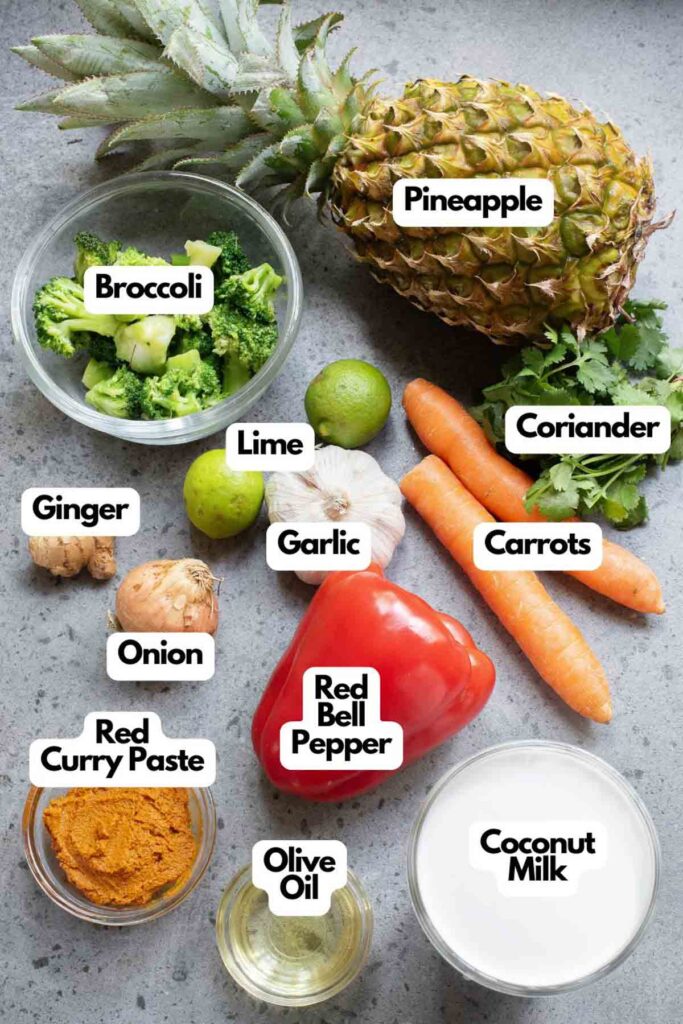
You’ll need all the ingredients shown in the photograph below.
How to Make Thai Coconut Curry with Step-By-Step Instructions
Scroll down for the full recipe card containing a full printable recipe and measurements in both US customary and metric units.
If you follow my simple instructions, you’ll find this Thai Coconut Curry comes together easily with bold flavors in every bite.
Sauté the Vegetables
Heat olive oil in a large non-stick skillet over medium heat. Add the chopped carrots and onion, stirring for about a minute until they start to soften.
Add the Remaining Vegetables and Aromatics
Stir in the diced red bell pepper, broccoli florets, pineapple chunks, minced garlic, and ginger.
Let them cook for about two minutes, stirring occasionally. This step helps bring out their natural sweetness and infuses the dish with fresh, aromatic flavors.
Incorporate the Curry Base
Add the red curry paste and stir well so it coats the vegetables evenly. Pour in the coconut milk, then add the lime juice and chopped coriander.
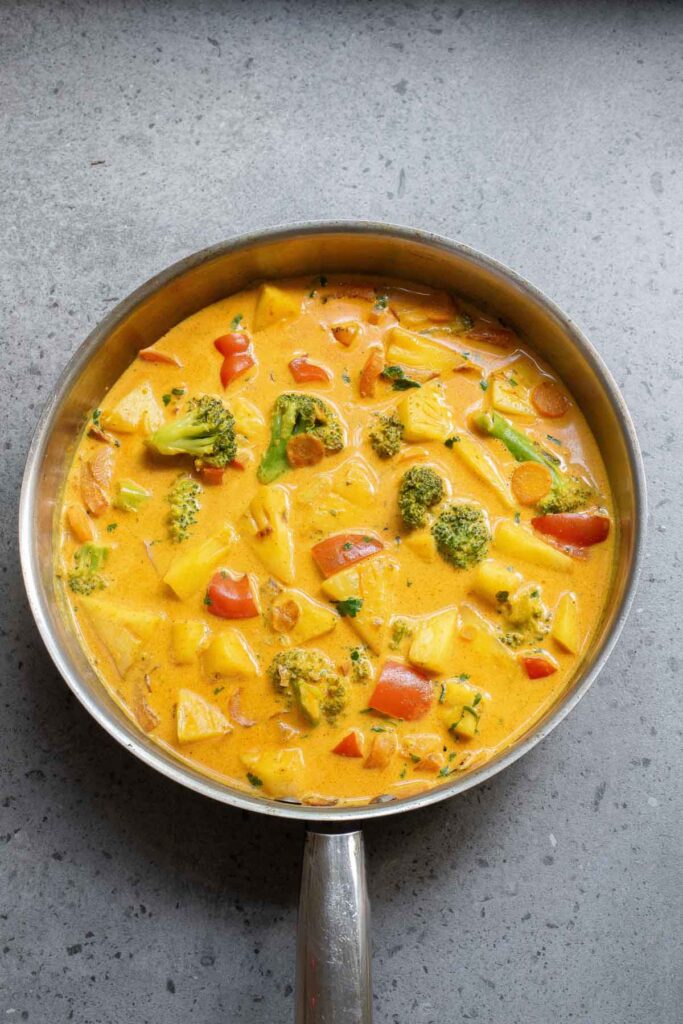
Stir everything together and let it simmer for about two minutes, allowing the flavors to meld.
Finish and Serve
Remove the skillet from heat and garnish with extra coriander. Serve warm with steamed rice or noodles, letting them soak up the creamy, flavorful sauce.
Serve and enjoy!
Thai Coconut Curry
 Add Preferred Source
Ingredients
- 3 tablespoons olive oil
- 1 cup chopped carrot
- 1 small onion chopped
- 1 red bell pepper diced
- 1 cup broccoli florets
- 2 cups pineapple chunks
- 1 teaspoon minced garlic
- 1 teaspoon minced ginger
- 3 tablespoons red curry paste
- 1 can (14 ounces) coconut milk
- 2 teaspoons lime juice about ½ lime
- 3 tablespoons chopped coriander plus more for garnish
Instructions
- Heat olive oil in a large non-stick skillet over medium heat.3 tablespoons olive oil
- Add carrots and onion, sauté for 1 minute until slightly softened.1 cup chopped carrot, 1 small onion
- Stir in bell pepper, broccoli, pineapple, garlic, and ginger. Cook for 2 minutes, stirring occasionally, to release the flavors.1 red bell pepper, 1 cup broccoli florets, 2 cups pineapple chunks, 1 teaspoon minced garlic, 1 teaspoon minced ginger
- Add red curry paste, coconut milk, lime juice, and chopped coriander. Stir everything together and bring to a gentle simmer for 2 minutes.3 tablespoons red curry paste, 1 can (14 ounces) coconut milk, 2 teaspoons lime juice
- Remove from heat and garnish with extra coriander.3 tablespoons chopped coriander
- Serve warm with steamed rice or noodles.
Notes
- Use Full-Fat Coconut Milk: For the richest, creamiest sauce, go with full-fat coconut milk. Light versions will make the curry thinner and less flavorful.
- Sauté the Aromatics First: Cooking the garlic and ginger along with the veggies helps develop a deeper, more fragrant flavor.
- Adjust the Spice Level: Red curry paste can vary in heat, so start with less if you prefer a milder curry, and add more to taste.
- Balance the Flavors: If your curry tastes too spicy or tangy, a teaspoon of honey or brown sugar can mellow it out and enhance the natural sweetness of the pineapple.
- Don’t Overcook the Vegetables: The broccoli and bell pepper should still have a bit of bite to them for the best texture.
- Serve It Your Way: This curry is great with jasmine rice, rice noodles, or even quinoa if you want something heartier.
- Customize with Protein: If you want to add protein, try tofu, shrimp, or chicken. Cook them separately before adding them to the curry so they don’t get overcooked.
- Fresh Garnishes Make a Difference: A final sprinkle of fresh coriander and an extra squeeze of lime juice right before serving brightens up the flavors.
Nutrition
Recipe Notes and Expert Tips
I’ve got a few tips to help you get the best results with your Thai Coconut Curry.
- Use Full-Fat Coconut Milk: For the richest, creamiest sauce, go with full-fat coconut milk. Light versions will make the curry thinner and less flavorful.
- Sauté the Aromatics First: Cooking the garlic and ginger along with the veggies helps develop a deeper, more fragrant flavor.
- Adjust the Spice Level: Red curry paste can vary in heat, so start with less if you prefer a milder curry, and add more to taste.
- Balance the Flavors: If your curry tastes too spicy or tangy, a teaspoon of honey or brown sugar can mellow it out and enhance the natural sweetness of the pineapple.
- Don’t Overcook the Vegetables: The broccoli and bell pepper should still have a bit of bite to them for the best texture.
- Serve It Your Way: This curry is great with jasmine rice, rice noodles, or even quinoa if you want something heartier.
- Customize with Protein: If you want to add protein, try tofu, shrimp, or chicken. Cook them separately before adding them to the curry so they don’t get overcooked.
- Fresh Garnishes Make a Difference: A final sprinkle of fresh coriander and an extra squeeze of lime juice right before serving brightens up the flavors.
How to Store Leftover Thai Coconut Curry
Leftovers can be stored in an airtight container in the fridge for up to four days. When reheating, warm it gently on the stovetop over low heat, stirring occasionally to keep the sauce from separating.
If the sauce thickens too much, add a splash of coconut milk or water to loosen it up.
You can also freeze this curry for up to three months. Let it cool completely before transferring it to a freezer-safe container. Thaw in the fridge overnight and reheat on the stove, adding a bit of coconut milk if needed to refresh the texture.
What to Serve With Thai Coconut Curry
Thai Coconut Curry pairs perfectly with steamed jasmine or basmati rice, which soaks up the rich sauce. Rice noodles are another great option if you prefer something lighter.
For a little crunch, top with crushed peanuts or cashews. A side of crispy tofu or spring rolls also makes a great addition to round out the meal.
More Easy Recipes for You to Try at Home
If you’re a big Asian food fan like me, you should check out these easy recipes.