If you’re looking to warm up with a hearty and flavorful dish, Kimchi Stew is perfect. It’s a traditional Korean recipe that blends sour kimchi with rich, savory ingredients to create a comforting meal. It’s perfect for those cooler evenings or whenever you need a little nourishment to warm your soul.

This post contains affiliate links. As an Amazon Affiliate, if you purchase through those links, I earn a small commission. Thank you!
This kimchi stew recipe, known as kimchi-jjigae in Korea, is a true gem at my table. Whether I’m making it for a lazy weekend lunch or a weeknight dinner, it never fails to completely satisfy me. The spicy, sour flavors combined with the soft textures of tofu and tuna create a harmony that’s just perfect for any season.
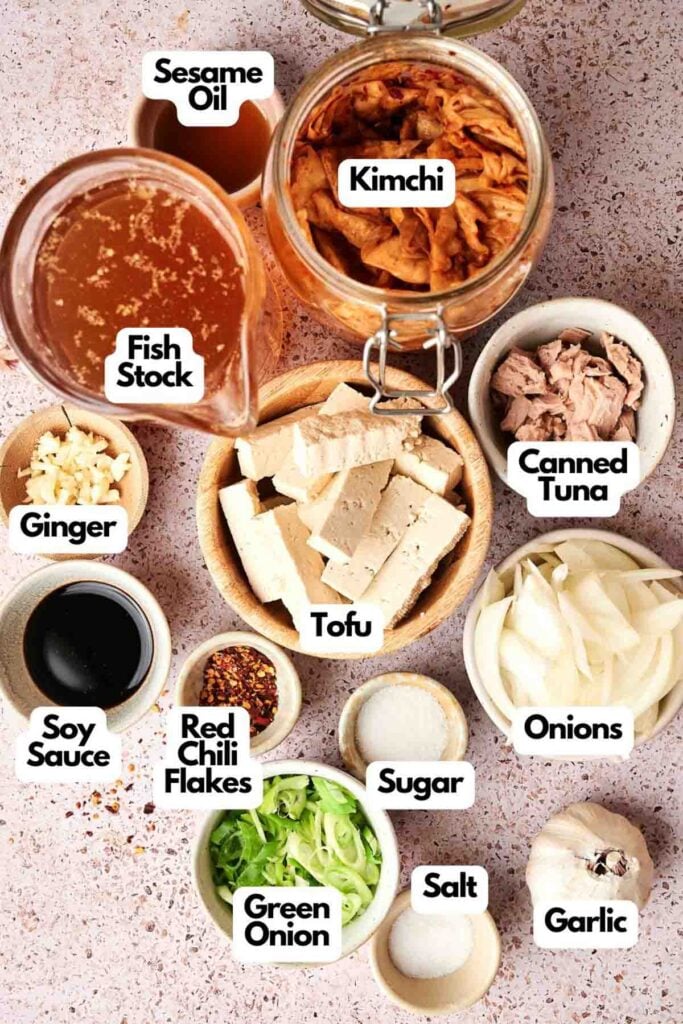
Ingredients You’ll Need
You’ll need all the ingredients in the photograph below.
How to Make Kimchi Stew
Let’s get that pot on the stove! Making kimchi stew is really simple. Here’s how I do it:
Heat It Up
Begin by heating the sesame oil in a pot over medium heat. This is where all the flavors start to come together.
Sauté the Aromatics
Once the oil is hot, throw in the onions, garlic, and kimchi. Stir them around for about 5 minutes. You want everything to be fragrant and the onions translucent.
Bring in the Liquids and Tuna
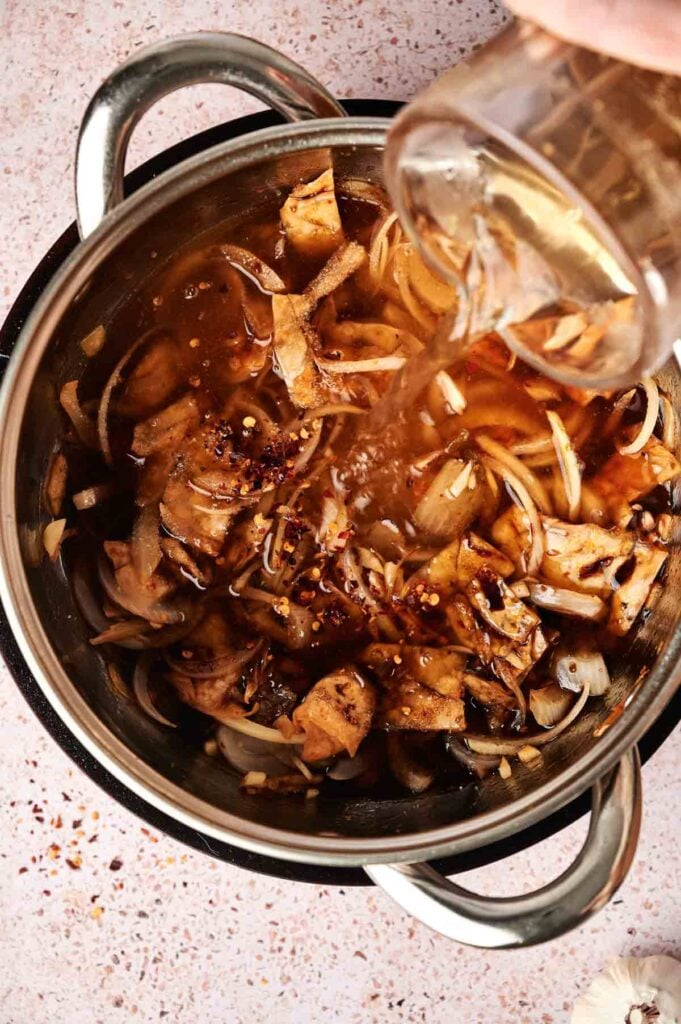
Next, sprinkle in the sugar, then pour in the dashi or fish stock along with the soy sauce and chili flakes. You can use gochugaru (Korean chili flakes) if you have it on hand. Give it all a good stir. Now, add the drained tuna to the pot. Let it all simmer together for another 10 minutes so the flavors can really meld.
Add the Tofu
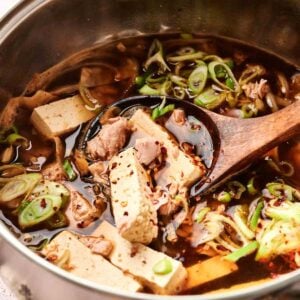
Just before you’re ready to serve, add the thick slices of tofu to the pot. Let them warm through gently—they’ll soak up all those delicious flavors.
Garnish and Serve
Finally, top your soup with some chopped green onions for a pop of color and freshness. Serve hot and enjoy every spoonful!
Kimchi Stew
 Add Preferred Source
Ingredients
- 2 tablespoons sesame oil
- 1 onion sliced thinly
- 3 garlic cloves minced
- 1 cup kimchi chopped (+juices)
- 1 teaspoon sugar
- 2 ½ cups dashi or fish stock
- 2 tablespoons soy sauce
- 1 tablespoon red chili flakes
- 1 canned tuna drained
- ½ pound tofu block cut in thick slices
- 1 green onion chili pepper optional, for garnish
Instructions
- Add sesame oil to a pot over medium heat.2 tablespoons sesame oil
- Once the oil is hot, add the onion, garlic and kimchi (plus the juices) and cook for about 5 minutes, stirring often to ensure even cooking.1 onion, 3 garlic cloves, 1 cup kimchi
- Add the sugar, dashi, soy sauce, chili flakes and tuna and cook for 10 more minutes.1 teaspoon sugar, 2 ½ cups dashi or fish stock, 2 tablespoons soy sauce, 1 tablespoon red chili flakes, 1 canned tuna
- Right before serving, add the tofu slices and serve with green onions.½ pound tofu block, 1 green onion
Notes
- Kimchi Quality: The better your kimchi, the better your stew. If you can, get your hands on some homemade or store-bought kimchi that’s nicely fermented. More sour, more flavor!
- Adjust the Heat: If you’re sensitive to spice, you can reduce the amount of chili flakes (or gochugaru). Conversely, if you’re a heat seeker, feel free to amp it up with extra chili flakes or chili powder!
- Fish Stock vs. Dashi: I prefer using dashi for its umami punch, but fish stock works great too. Each brings a slightly different depth of flavor.
- Extra Veggies: Feel free to toss in some shiitake mushrooms, napa cabbage, or daikon radish for extra texture and taste.
- Tofu: Silken tofu is lovely for a softer texture, but if you like it firmer, go for medium or firm tofu.
- Other Meats: Pork belly or beef slices make great alternatives to tuna in kimchi stew. Just cook them thoroughly before adding the rest of the ingredients.
- Gluten-Free: Kimchi stew can be gluten-free, but you have to make sure that the kimchi, soy sauce, and any broth you use are gluten-free. Always check the labels to be sure.
Storage Instructions
- Refrigerate: Let the stew cool down to room temperature before popping it into an airtight container. It will keep in the fridge for up to three days.
- Reheat: When you’re ready to enjoy it again, just reheat it gently on the stove or in the microwave. Just like that, you’re ready for another cozy meal!
Nutrition
Recipe Notes and Tips
A few tricks up my sleeve can turn this already fabulous kimchi stew into something unforgettable. Here’s what I’ve learned:
- Kimchi Quality: The better your kimchi, the better your stew. If you can, get your hands on some homemade or store-bought kimchi that’s nicely fermented. More sour, more flavor!
- Adjust the Heat: If you’re sensitive to spice, you can reduce the amount of chili flakes (or gochugaru). Conversely, if you’re a heat seeker, feel free to amp it up with extra chili flakes or chili powder!
- Fish Stock vs. Dashi: I prefer using dashi for its umami punch, but fish stock works great too. Each brings a slightly different depth of flavor.
- Extra Veggies: Feel free to toss in some shiitake mushrooms, napa cabbage, or daikon radish for extra texture and taste.
- Tofu: Silken tofu is lovely for a softer texture, but if you like it firmer, go for medium or firm tofu.
- Other Meats: Pork belly or beef slices make great alternatives to tuna in kimchi stew. Just cook them thoroughly before adding the rest of the ingredients.
- Gluten-Free: Kimchi stew can be gluten-free, but you have to make sure that the kimchi, soy sauce, and any broth you use are gluten-free. Always check the labels to be sure.
How to Store Leftover Kimchi Stew
Kimchi stew actually tastes even better the next day after the flavors have had more time to mingle. Just let the stew cool down to room temperature before popping it into an airtight container. It will keep in the fridge for up to three days.
When you’re ready to enjoy it again, just reheat it gently on the stove or in the microwave. Just like that, you’re ready for another cozy meal!
What to Serve With Kimchi Stew
Serve it with a bowl of fluffy white rice to soak up all that delicious broth. For those who enjoy a little extra green, a side of steamed or sautéed greens like spinach or bok choy complements the stew well. And if you’re in the mood for a full Korean dinner, pair it with a side of Korean pancakes (pajeon) for that perfect crispy contrast. Dinner is served, and it’s looking good!
More Comfort Food You Will Love
- Bibimbap Recipe
- Birria Ramen
- Sushi Bake
- Tom Yum Soup
- Egg Drop Soup