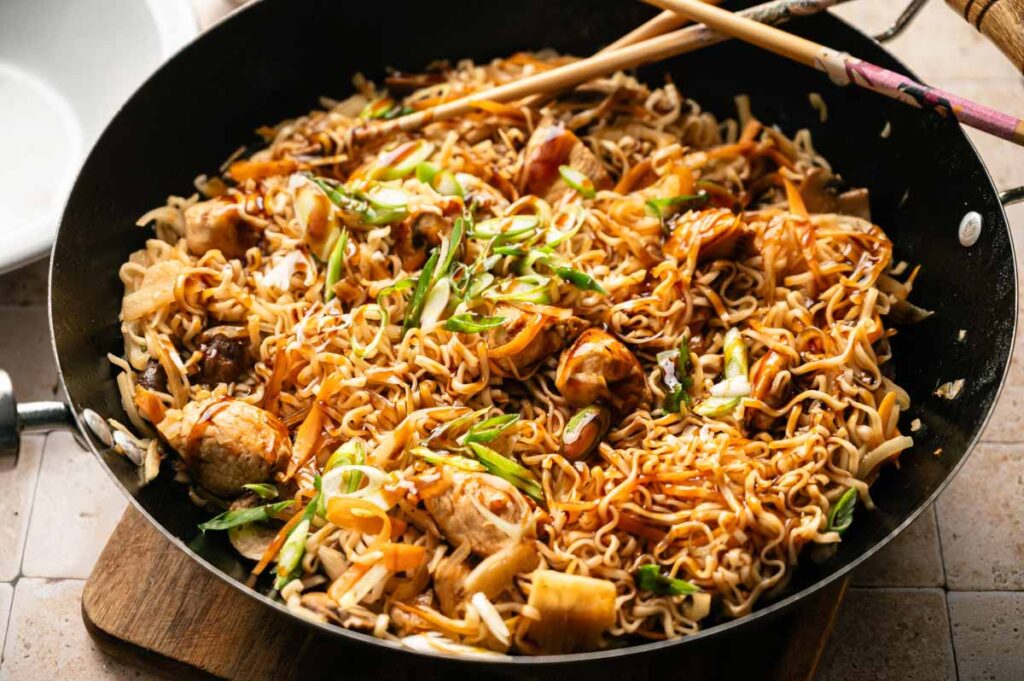
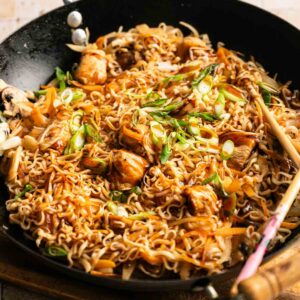
I started cooking Yakisoba at home to save money on takeout, and now I honestly like it even better. The noodles are tender and coated in a sweet and tangy sauce, the chicken is golden and juicy, and the crisp cabbage, carrots, and mushrooms make every bite fresh and delicious. It’s bold, fast, and incredible on the table every time.
This post contains affiliate links. As an Amazon Affiliate, if you purchase through those links, I earn a commission. Thank you!
I make this for quick lunches, weeknight dinners, get-togethers with friends, meal prep, and anytime I’m craving takeout because it’s faster, fresher, and more flavorful than anything you can order. It’s budget-friendly, comes together in one pan, and feeds the whole family without any fuss. Leftovers keep in the fridge for up to 3 days and reheat easily in a skillet or microwave.
Ingredients You’ll Need
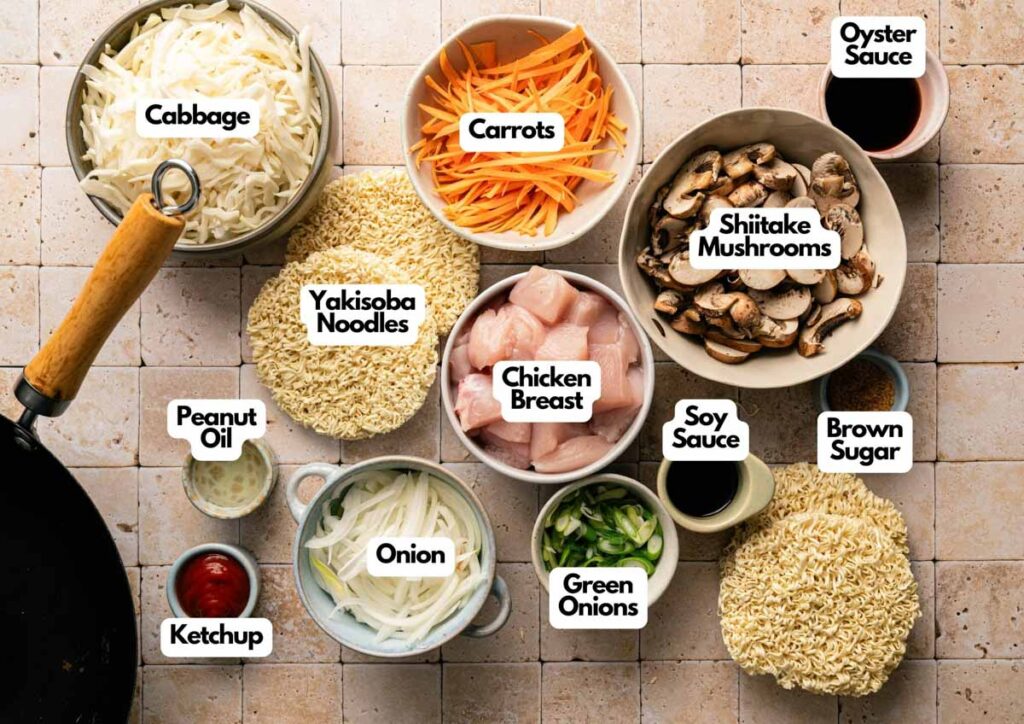
You’ll need all the ingredients shown in the photograph below.
How to Make Yakisoba with Step-By-Step Instructions
Scroll down for the full recipe card containing a full printable recipe and measurements in both US customary and metric units.
This simple recipe is almost as effortless as instant yakisoba, but way more special and rewarding with real flavors and no artificial ingredients when you make it yourself!
Cook the Noodles
In a large pot, cook your yakisoba noodles according to the package directions. As much as possible, stick to yakisoba noodles for that authentic Japanese yakisoba dish, but if you can’t, Chinese noodles can work well as a substitute. You may also use yaki udon, which are pretty much thicker.
Dried ramen noodles work in a pinch, but dried noodles change the texture significantly since they lack the soft, pre-steamed quality of fresh yakisoba noodles. Chinese-style noodles also have higher starch content, so if you’re using them, you might need to rinse them briefly in hot water to remove any excess starch.
Drain them and set aside. A deep stainless steel colander makes draining fast and easy without losing any noodle strands to the sink. My secret is to toss them with just a tiny bit of cooking oil after draining, so they don’t clump together while I work on the rest of the dish.
Mix the Sauce
While the noodles cook, whisk together the oyster sauce, ketchup, low-sodium soy sauce, and brown sugar in a small bowl until all the sauce ingredients are fully combined and the sugar is completely dissolved.
For ketchup, you can use regular ketchup, tomato ketchup to add a slightly tangy taste, or banana ketchup for more sweetness. You may also swap ketchup and oyster sauce altogether for tonkatsu sauce or Japanese Worcestershire sauce if you want a deeper, savory flavor you’d find in classic Japanese cuisine.
Set it aside so it’s ready to pour in the moment you need it. Having the sauce prepped ahead makes the whole stir-fry process seamless.
Sear the Chicken
Heat the peanut oil in a wok or large pan over medium-high heat. A carbon steel wok is ideal for this, as it heats quickly and gives you that high-heat sear that makes stir-fry so good.
Once the oil is shimmering, add the chicken breast, cubed into bite-sized pieces. Cook it until it’s golden on the outside and fully cooked through.
If ever you want to switch protein, thinly sliced pork belly or pork loin is also a traditional protein source alternative for yakisoba recipes. Note that this is a major change in the flavor profile since pork belly adds fat and richness that chicken doesn’t have, while pork loin is leaner and slightly milder in taste.
Stir-Fry the Vegetables
Add the thinly sliced onion, julienned carrot, sliced shiitake mushrooms, and thin strips of cabbage to the frying pan. A mandoline slicer makes quick work of prepping these veggies, especially the carrots.
You could also toss more vegetables like bean sprouts, sliced red, and green peppers, though these are completely optional. Bean sprouts add a light crunch and hold up well in the stir-fry, while the bell peppers bring a mild, fruity sweetness to the final dish.
Stir-fry everything together until the vegetables are tender-crisp, meaning they still have a little bite and haven’t gone soft. A sturdy long wooden spoon helps you toss everything around without scratching your pan, and it makes the whole process feel a lot more controlled.
Bring It All Together
Add the pre-cooked yakisoba noodles and your prepared sweet and savory sauce directly into the pan. Pre-steamed or fresh noodles give you the best texture because they absorb the sauce quickly on a hot surface without getting gummy, so it’s important that you don’t skip cooking them separately.
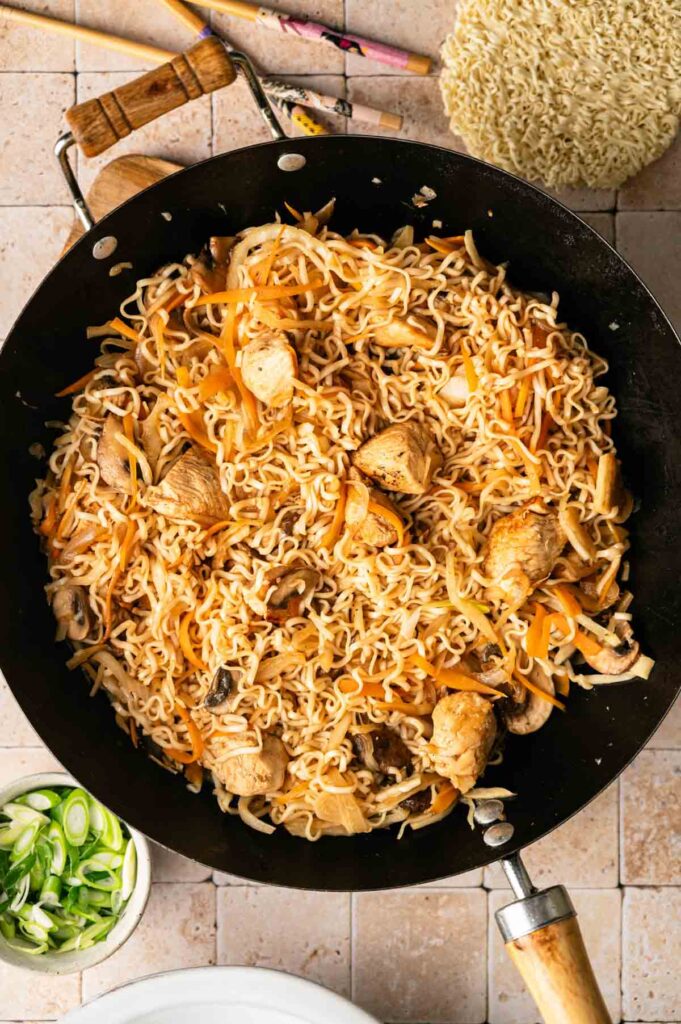
Toss everything together well and cook for 2 to 3 minutes until the noodles are heated through and every strand is coated in that glossy sauce. A pair of heat-resistant kitchen tongs or bamboo chopsticks makes tossing the noodles through the sauce much easier than a wooden spoon or spatula alone.
Garnish and Serve
Finish with sliced green onions over the top and serve immediately right out of the pan while everything’s warm. If you want extra toppings, try a pile of red pickled ginger for that bright, tangy contrast to the savory noodles, or a crack of black pepper to wake up all the flavors without overpowering anything. Enjoy!
Yakisoba is a popular choice for potlucks and casual gatherings because it travels well and holds up at room temperature for a couple of hours. Pack it in an airtight container and an insulated bag to keep it warm during transport, and give it a gentle toss before serving if it’s been sitting.
Yakisoba
 Add Preferred Source
Ingredients
For the Sauce:
- 2 tablespoons oyster sauce
- 2 tablespoons ketchup
- 2 tablespoons low-sodium soy sauce
- 1 tablespoon brown sugar
For the Main:
- 1 pound yakisoba noodles
- 1 tablespoon peanut oil
- 1 pound boneless skinless chicken breast, cubed
- 1 small onion sliced
- 1 medium carrot julienned
- 1 cup shiitake mushrooms sliced
- 4 cups cabbage chopped
- 2 green onions sliced
Instructions
- Cook the yakisoba noodles according to package instructions, then drain and set aside.1 pound yakisoba noodles
- Whisk together oyster sauce, ketchup, soy sauce, and brown sugar in a small bowl.2 tablespoons oyster sauce, 2 tablespoons ketchup, 2 tablespoons low-sodium soy sauce, 1 tablespoon brown sugar
- Heat peanut oil in a wok or large skillet over medium-high heat.1 tablespoon peanut oil
- Cook the chicken until golden and fully cooked through.1 pound boneless
- Add onion, carrot, mushrooms, and cabbage, and stir-fry until tender-crisp.1 small onion, 1 medium carrot, 1 cup shiitake mushrooms, 4 cups cabbage
- Add the cooked noodles and prepared sauce to the pan.
- Toss everything together and cook for 2–3 minutes until heated through and well coated.
- Garnish with sliced green onions and serve warm.2 green onions
Notes
Nutrition
How to Store Leftovers
Let the yakisoba cool completely before transferring it to an airtight glass meal prep container for fridge storage, where it’ll keep well for up to 3 days.
When you’re ready to eat, reheat it in a skillet over medium heat with a small splash of water or extra soy sauce to loosen everything up and bring back that glossy sauce coating. Microwaving is also fine.
For longer storage, portion the cooled noodles into freezer-safe containers and freeze for up to 3 months. Thaw overnight in the refrigerator and reheat in a hot pan, adding a little liquid to revive the texture.
What to Serve With Yakisoba
It’s filling enough to stand on its own, but it also pairs really nicely with other Japanese dishes like a bowl of miso soup or a simple, clear broth on the side to round out the meal.
Steamed edamame or a crisp cucumber salad with rice vinegar also works beautifully alongside it, adding something light and refreshing to balance the savory noodles. You could also top it with fried egg or two, and add more sauce to pour over if you want.
For a bigger spread, gyoza or spring rolls make a great starter before serving the yakisoba as the main. If you’re putting together a full Japanese-inspired dinner, a side of steamed white rice can help stretch the meal further when you’re feeding a larger group.
More Easy Recipes for You to Try at Home
Here are more quick Asian-inspired dinners I think you’ll love making.